Carrie Grail
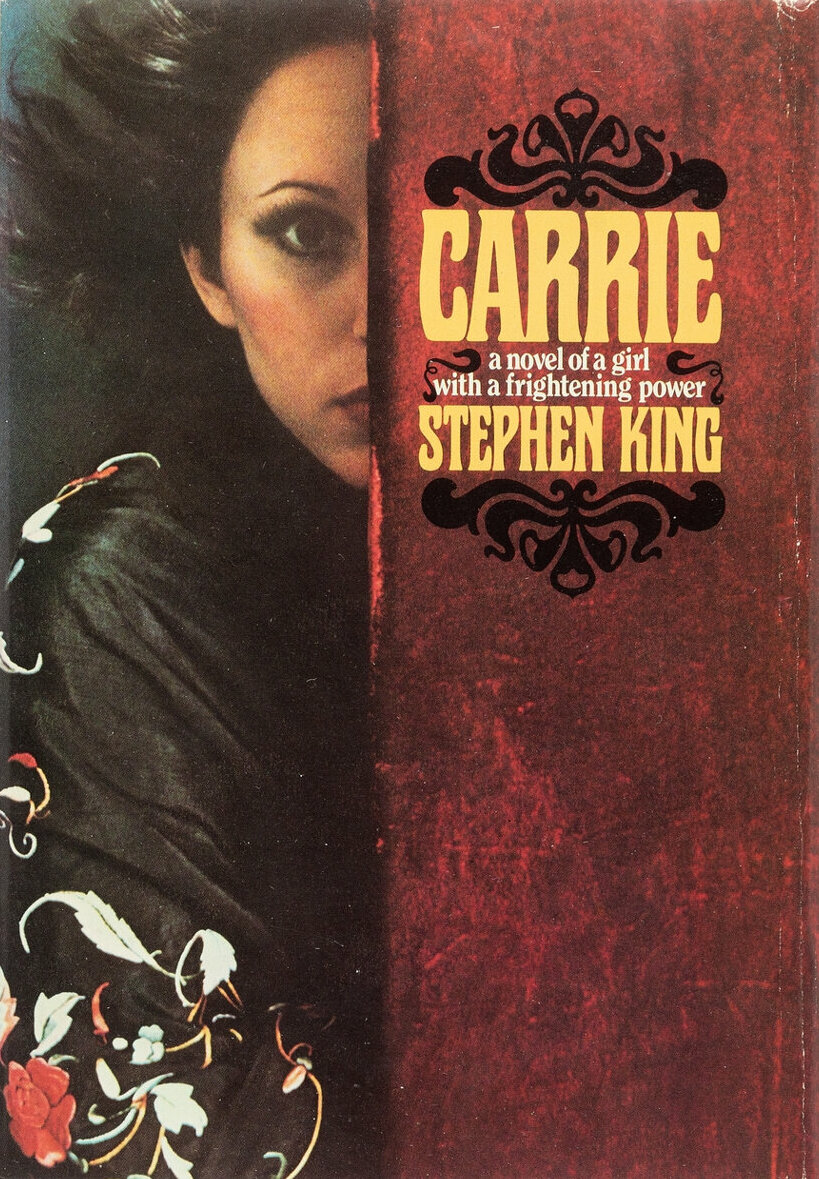
What it’s about
Carrie White is a shy, friendless high school senior raised by a domineering, religiously fanatical mother, and a relentless target of cruelty from her classmates. When a humiliating incident in the girls' locker room becomes the latest torment, the painfully sheltered girl begins to discover a strange power stirring inside her — telekinesis she can barely understand or control. As an invitation to the senior prom offers a fragile chance at acceptance, the pressures of home, school, and her awakening ability draw toward a breaking point.
Significance Stephen King's debut novel (Doubleday, 1974) — the breakout that launched his career, famously rescued from the trash by his wife Tabitha, and adapted into Brian De Palma's iconic 1976 film starring Sissy Spacek, plus later remakes and a Broadway musical.
How to spot a true first 30-second check
A true 1st/1st needs BOTH the book and the jacket verified. A first-state jacket on a later or book-club book — or the reverse — is a married copy, not a first.
The verification ledgerevery marker, graded — verified · asserted · unverified
Verified seen on a confirmed copy Asserted sourced, not yet photographed Unverified thin / contested
A true 1st/1st must show
- Asserted Gutter code book — "P6" in the gutter at the foot of page 199 (the last page of text). P=1974 print year, 6=printing week. This exact value is the defining first-printing tell.
- Asserted Copyright statement book — "First Edition" printed on the copyright page — necessary but NOT sufficient on its own (BCEs of this era carry the same line); it must pair with the P6 code.
- Asserted Binding book — Full maroon/burgundy cloth boards (single cloth, not quarter-bound), sewn, with gilt (gold) spine lettering. Octavo, 199 pp, trim 5¾ x 8½ x 0.9".
- Asserted Endpapers book — Black endpapers — a corroborating feature of the trade first (paired with maroon cloth + gilt spine). Corroborating, not decisive; top-stain color is not load-bearing.
- Asserted Jacket price jacket — Unclipped "$5.95" on the upper inside front flap. (Some descriptions also note a small publisher's code "C" above the price; treat that as a corroborating detail, not a requirement — the canonical sources cite only $5.95.)
- Asserted Jacket art / credit jacket — Pictorial "CARRIE" jacket designed by Alex Gotfryd; the back flap carries the "Jacket by Alex Gotfryd" credit and the rear panel a young-King author photo.
Disqualifies it — book-club or later
- Asserted Wrong gutter code — Any gutter code OTHER than P6 on the late text page (e.g. O12 or L25 on page 198/199) is a Book Club / later state — NOT a first.
- Asserted No code + number line — A printing number line on the copyright/last page (e.g. "11 13 15 17 18 16 14 12") with no P6 gutter code is a LATER trade printing, not the first.
- Asserted Unpriced jacket flap — No price printed inside the front flap = a Book Club jacket (the official guide's BCE tell). A higher printed price (e.g. $17.95) = a later trade printing.
- Asserted BCE physical tells — Smaller/lighter book, often glued rather than sewn, a rear-board blind blind-stamp, and cheaper solid-color boards instead of maroon cloth with gilt spine and black endpapers — all flag a Book Club Edition.
Proves nothing — shared traps
- Shared "First Edition" on copyright page — Shared — Doubleday Book Club Editions of this era print the identical "First Edition" line. It proves nothing alone; pair it with the P6 code.
- Shared Presence of a gutter code — Shared — the BCE ALSO carries a Doubleday gutter code (documented O12, L25). Only the VALUE "P6" on page 199 is decisive; the mere presence of a code does not confirm a first.
- Shared Page-199 location — Not a clean discriminator — BCE/later codes also appear on page 198 or 199. The discriminator is the code value (P6), not where it sits.
- Shared Married jacket — A Book Club or later-printing jacket can be placed on a P6 first (or vice versa) to replace a lost/damaged jacket — confirm BOTH an unclipped $5.95 flap AND P6 on page 199; one without the other is a married copy.
What to look for
- Find "P6" in the gutter at the foot of page 199 — that alphanumeric code, not the copyright wording, is the first-printing proof.
- "First Edition" on the copyright page is necessary but NOT enough — book-club editions print the identical line.
- BCE trap: smaller trim, thinner/glued paper, rear-board blind-stamp, no flap price, solid boards instead of maroon cloth, and a non-P6 code (L25/H18/AA42).
- First-issue jacket shows "$5.95" with a "C" above it on the front flap — a price-clipped flap hides this and can mask a club jacket.
- Confirm the trio together: P6 on page 199 + black endpapers + maroon cloth with gilt spine — and watch for married (later/club) jackets on a P6 book.
- Earlier than the trade first exists only as the advance-wraps proof (printed wraps, code "O50," late 1973) — a pre-pub state, not the first hardcover.
Verified listings marker-checked
Each copy screened against the seller's own photos. ✓ confirmed = a photo shows the decisive marker; ⚠ not pictured = the shot to ask for before buying. Condition grades are as-pictured.
Buyer beware — verify before you buy. These are our screening opinions, read from each seller’s own photographs; we can misjudge a copy or misread an image. A listing marked “1st/1st confirmed” is not a guarantee — independently confirm the decisive book and jacket markers with the seller before any purchase. Authentication and the buying decision remain the buyer’s responsibility.

Both decisive tells for the 1974 Doubleday Carrie are legibly photographed on this copy — the gutter code read as "P6" at the foot of page 199, and an unclipped "c. / $5.95" front flap — and what is still outstanding is corroboration rather than gate evidence: no frame shows an endpaper, no frame identifies which board is which, and the jacket is never photographed on the book.
- Gutter code — The printer's code reads "P6" at the foot of the gutter margin on the 198/199 spread, on the page-199 side (photo 2, legible under magnification) — the decisive book tell, and read off the VALUE, since our rubric records that the club edition also carries a code (O12, L25) but never P6.
- Jacket price — The head of the front flap prints the publisher's code "c." above "$5.95" with the flap corner intact and uncut (photo 4 close-up; the same price visible at the flap head in the whole-jacket shot, photo 0) — the decisive trade-vs-club jacket tell, a club jacket carrying no flap price at all.
- Copyright — The copyright page is photographed whole and legible: "ISBN: 0-385-08695-4 / Library of Congress Catalog Card Number 73-9037 / Copyright © 1974 by Stephen King / All Rights Reserved / Printed in the United States of America / First Edition" (photo 1), with the title page reading Doubleday & Company, Inc., Garden City, New York, 1974 (photo 8) — necessary support, never proof on its own, as club editions of this era print the identical "First Edition" line.
- Number line — The whole copyright page is in frame and carries no printing line (photo 1) — an affirmative absence, not a guess, which rules out the later trade printing that substitutes a number line for the gutter code.
- Binding — A full maroon cloth case, single cloth and not quarter-bound, with gilt spine lettering "STEPHEN KING / CARRIE" and "Doubleday" at the spine foot (photo 0, legible when enlarged); page 199 is shown as the last page of text (photo 2), matching the 199-page collation of the first.
- Dust jacket — The pictorial "CARRIE" jacket is shown complete and printed-side up (photo 0), the rear flap carrying the young-King author photograph with an "…BY ALEX GOTFRYD" credit legible beneath it (photo 5) and the rear panel the publisher's blurb; a further credit line and "Printed in the U.S.A." sit at the flap foot in photo 0, but only at overview resolution.
- Endpapers / edges — The black endpapers our rubric treats as a corroborating trade-first feature are not established — no frame shows a pastedown or free-endpaper face (photos 1 and 8 are taken past the hinge, with only the board's outer edge in view), and while a dark leaf-edge is glimpsed under one board at the fore-edge in photo 7, an oblique edge shadow photographs the same way; ask for a straight-on, evenly lit shot of the front pastedown and free endpaper with the cover opened flat.
- Board identification (rear-board blind-stamp) — Photos 6 and 7 each show a bare, unlettered maroon board face with no blind-stamp visible, but neither frame shows the spine or any spine lettering, so neither face can be identified as front or rear and the club blind-stamp is not excluded by photograph — corroboration only, since the photographed P6 already rules out the club state under our rubric; ask for the book stood upright with the spine at the viewer's right, that board face raked to the light.
- Jacket on the book (married-copy check) — Every jacket frame shows it off the book (photos 0, 3, 4, 5) and every case frame shows it bare (photos 0, 6, 7), so no single frame ties the priced $5.95 flap to the P6 text block; ask for one shot of the book wearing its jacket.

Genuine 1974 first, bench-read P6 — but a clipped, inscribed NF/VG+ reader; $2,700 is unclipped money, offer $1,500-$1,800.
- Gutter code P6 — P6 bench-read in the gutter at the foot of p.199 (last text page) — the decisive 1974 Doubleday first-printing tell, verified plate-by-plate.
- Copyright — Copyright page states "First Edition"; with P6 it clears the BCE trap (L25/H18/AA42).
- Dust jacket — Pictorial Carrie jacket, correct Gotfryd art and trade ISBN — no book-club tells.
- Binding / Endpapers — Maroon cloth case with black endpapers, matching the genuine trade first.
- Jacket price — Jacket is price-clipped (seller-disclosed); the $5.95 flap with the first-issue 'C' code is not photographed, so the clip can't be visually confirmed.
- Inscription / condition — Endpaper carries a 'With Compliments of Doubleday' inscription — ask for a clear shot before settling on grade.

Genuine 1974 first, bench-read P6 — but $4,500 is bright-coat money for a chipped, toned VG+ jacket; buy under and get the flap shot.
- Gutter code P6 — P6 sits plainly in the gutter at the foot of p.199 — bench-read; the binary first-printing proof for this title.
- Copyright — Copyright page reads "First Edition" with the correct trade ISBN 0-385-08695-4.
- Binding — Honest maroon cloth boards, no book-club blind-stamp.
- Jacket price — First-state $5.95 unclipped flap is seller's word only — the priced flap face was never photographed; ask him to shoot it before settling.
- Condition — Spine-head chip and a toned jacket put it at NF/VG+ — get a close-up of the spine head to confirm grade.
One jacket-only photo — edition unproven; needs the P6 gutter shot, and $975 is aggressive for a stamped, restored, repaired-jacket copy.
- Dust jacket — Single photo shows the correct pictorial Carrie jacket front + spine (STEPHEN KING / CARRIE / Doubleday), in mylar.
- Gutter code — DECISIVE P6 tell not pictured — no interior shot; ask for a close-up of the gutter code at the foot of the last text page (should read P6).
- Copyright — "First Edition" statement is seller-asserted in text only, never photographed.
- Binding — Rear board not shown — can't exclude a BCE blind-stamp dot (the #1 trap on this title); ask for a rear-board photo.
- Jacket price — Jacket price-clipped per text, flap not shown, so no $5.95 to corroborate. Note the 'Lake Park Club' stamp on the text-block top edge.
Exterior-only photos on a $3,250 grail — edition unproven; the missing P6 gutter shot is the gating item before paying grail money.
- Dust jacket — Jacket spine reads "STEPHEN KING CARRIE / Doubleday" at foot — correct title/author/publisher.
- Binding — Bare maroon cloth boards, gilt spine + "Doubleday" at foot (photo 4), consistent with the 1974 Doubleday issue.
- Gutter code — DECISIVE P6 tell not pictured — all 5 photos are exterior; seller asserts P6 on p.199 in text only. Ask for a close-up of the gutter code.
- Copyright — "First Edition" statement seller-asserted in text but not photographed; ask for a clear copyright-page shot.
- Jacket price — Jacket is price-clipped (edgewear, taped 1cm tear inside lower flap); the $5.95 first-state price is not legible/shown.
Full identification detail & sourcescopyright · jacket · binding · book-club traps · print run · value · references
YES — the Doubleday trade hardcover (1974) IS the true first edition. No small-press limited precedes it; Carrie was King's debut novel and was published only by Doubleday in hardcover (Garden City, NY). The only thing earlier than the trade first is the publisher's ADVANCE REVIEW COPY / uncorrected proof, issued in printed paper wraps (softcover proof, not a hardcover edition), reported to carry the earlier gutter code "O50" (i.e. late 1973 — week 50). Wikipedia independently confirms advance copies were sent to salesmen in 1973 ahead of the April 1974 release. That proof is a famous King rarity but is a WRAPS proof, not the "first hardcover." The first PUBLISHED hardcover state is the "P6" trade first described below. NOTE on dates (INDEPENDENTLY RE-CONFIRMED): the gutter code reflects the PRINTING week — "P6" = printed the 6th week of 1974 (mid-February) — while the book was ultimately PUBLISHED April 5, 1974 (Wikipedia; thedarktower.org/Palaver gutter-code thread confirms the letter=year/number=printing-week scheme). Do not conflate the printing-week code with the publication date.
First-printing points at a glance
Dust jacket
Pictorial/photographic dust jacket. Front panel features the stylized title "CARRIE" with teaser/tagline copy introducing Carrie White and the telekinetic-horror premise; spine and front carry title/author. Front flap carries the "$5.95" price (with a "C" above it) and jacket blurb. Rear panel/back flap carries a black-and-white author photograph of a young Stephen King plus biographical/jacket copy, with the credit "Jacket by Alex Gotfryd" printed on the back flap. Presents the menacing-debut-horror branding of the period.
Art / design: Dust jacket designed by Alexander (Alex) Gotfryd, longtime Doubleday art director (he also designed the jacket for Peter Benchley's Jaws). The rear-panel author photograph is also attributed to Gotfryd (c. 1974). Re-confirmed this pass: the credit "Jacket by Alex Gotfryd" appears on the back flap of the first-edition jacket (multiple dealer descriptions; Wikimedia Commons author-photo attribution to Gotfryd; Heritage catalog entry).

Also watch for: (1) MARRIED JACKETS — a later-printing or book-club jacket placed on a P6 first (or vice versa); confirm the jacket shows an unclipped "$5.95" (with "C") front flap AND the book shows "P6" on page 199 AND black endpapers. (2) PRICE-CLIPPED jackets hide the price point, depress value, and can mask a club jacket. (3) FACSIMILE / reproduction dust jackets are openly sold (e.g., dustjackets.com) — acceptable on a true first only if disclosed; undisclosed it is a trap. (4) EX-LIBRARY copies (stamps, pockets, spine labels) are heavily devalued. (5) REMAINDER marks (sprayed/marker edge) indicate non-collectible stock. (6) BCEs misrepresented as "First Edition" because the copyright line says so — verify P6 on page 199, black endpapers, maroon cloth/gilt spine, full trim, sewn binding, ABSENCE of the rear-board blind-stamp, and the printed front-flap "$5.95/C" price; remember a non-P6 gutter code (L25/H18/AA42/etc.) flags a later printing or club copy. (7) Forged signatures on a debut this valuable — prefer provenance/COA for signed copies.
Print run & scarcity
~30,000 first-printing copies is the consistently repeated trade/dealer figure; roughly half reportedly went to libraries (hence the abundance of ex-library copies and the scarcity of clean trade firsts). It is NOT tied to a primary Doubleday production document or an authorized King bibliography in the sources found, so cite it as an approximation. Book Club Editions were printed in far greater numbers, which is the structural reason the market is flooded with BCEs misrepresented as firsts.
First-state points & errata
No widely-cited textual erratum/typo separates first-state from later first-printing trade copies — RE-CONFIRMED this pass: targeted searches for a documented first-state typo/errata return nothing; collector identification is purely CODE- and JACKET-based, not textual. The first-printing point is effectively binary: "First Edition" on copyright page + "P6" gutter code on page 199 + maroon cloth with gilt spine + BLACK endpapers + full trade trim (199 pp) + first-issue jacket showing "$5.95" (unclipped) with a "C" above the price on the front flap. This is distinct from the earlier advance-wraps proof (printed wraps, code "O50," ~late 1973), which is a pre-publication state, not the trade first hardcover.
Limited & signed editions
No contemporaneous signed/numbered or traycased limited edition was issued for the 1974 first (Doubleday issued only the trade first + book-club edition + the advance wraps proof). Later collectible variants exist (e.g., 2024 50th-anniversary editions; UK Hodder reissues) but those are reprints, not the true first. Value premiums attach to author-INSCRIBED/SIGNED copies of the 1974 first and to the early advance-wraps proof ("O50") — but neither is a publisher "limited edition." Custom clamshell/slipcases seen on dealer copies are aftermarket, not publisher-issued.
Market value confirmed sales
$2,500–6,000 (genuine first printing, unsigned, fine/fine, unclipped $5.95 jacket, P6 gutter code). A clean unsigned copy in true fine/fine realistically sits ~$2,500–4,500; only the very best, jacket-bright copies push toward $5,000–6,000. Signed/inscribed copies are a different market entirely ($4,000–15,000+).
Assumes a genuine first edition / first printing in near-fine to fine condition (clean copy, unclipped jacket). Lesser condition is worth less.
Confirmed sales: (1) Signed/inscribed first printing ("For Tim – Be well, Stephen King 6/24/88"), SOLD ~$1,800 — Nate D. Sanders Auctions. (2) Signed first edition/first printing, near fine, inscribed/dated — Nate D. Sanders (Lot 7119), realized in the low-to-mid four figures. (3) Heritage Auctions (historical.ha.com Lot 45182), first edition w/ P6 code to p.199, signed & dated "8/22/80" — sold via Heritage archive (signed premium copy). (4) Community/dealer consensus: signed good-to-excellent copies trading ~$2,000–3,000 at auction; unsigned true-first fine/fine dealer asks $3,995 (VeryFineBooks) to ~$7,500. NOTE: I could NOT verify a clean unsigned fine/fine realized hammer — do not treat the unsigned high end as a confirmed sale.
Book-club edition (the trap): $15–50. Book Club Edition (BOMC) is the dominant trap for this title — vastly more BCEs exist than trade firsts. A BCE in a fine jacket tops out around $40–60; ex-library or jacketless BCEs are $10–20. — a fraction of a true first; never pay first-edition money for one.
Condition is everything on Carrie: the jacket is the value. The $5.95 jacket tans/chips easily and is almost never found bright — a fine, unclipped, untanned jacket can double a copy's price versus a near-fine one. Price-clipping alone knocks 30–50% off. Signed/inscribed copies command a large premium (roughly 2–5x), and a King signature must be scrutinized because forgeries are common on this title. THE SINGLE BIGGEST TELL separating a real first from the constant mislistings: it is NOT the "First Edition" slug on the copyright page (the BCE also says "Book Club Edition"/"First Edition"-style wording and the gutter code can be faked-out by sellers). It is the combination of (a) the "P6" gutter code stamped at the foot of page 199 AND (b) the ABSENCE of any blind-stamp/deboss (circle, square, dot, or maple-leaf) on the lower rear board. A blind stamp on the back board = book club edition, period — no exceptions, regardless of what the copyright page or the seller says. Also confirm the priced $5.95 jacket (BCE jackets are unpriced) and reject ex-library and married/facsimile jackets.
- https://veryfinebooks.com/stephen-king-carrie-us-first-edition-printing-doubleday-1974-p6-code/
- https://historical.ha.com/itm/books/signed-editions/stephen-king-carrie-garden-city-doubleday-and-co-inc-1974-first-edition-with-printing-code-p6-to-page-199/a/6241-45182.s
- https://natedsanders.com/signed-copy-of-stephen-king's-first-novel,-''carrie''----first-edition,-first-printing-in-near-fine--lot7119.aspx
- https://discover.hubpages.com/literature/Carrie
- http://www.fedpo.com/BookDetail.php/Carrie
- https://www.stephenkingcollector.com/1st/carrie.html
Sources
- https://stephenking.com/other/identifying_first_editions.pdf
- http://www.fedpo.com/BookDetail.php/447
- https://www.secondhandsomebooks.com/post/5-clues-to-identifying-first-editions
- https://historical.ha.com/itm/books/signed-editions/stephen-king-carrie-garden-city-doubleday-and-co-inc-1974-first-edition-with-printing-code-p6-to-page-199/a/6241-45182.s
- https://www.secondstorybooks.com/pages/books/1372825/stephen-king/carrie
- https://en.wikipedia.org/wiki/Carrie_(novel)
- https://veryfinebooks.com/stephen-king-carrie-us-first-edition-printing-doubleday-1974-p6-code/
- https://www.baumanrarebooks.com/rare-books/king-stephen/carrie/107028.aspx
- https://www.nocloo.com/carrie-stephen-king-1974-bce/
- https://www.burnsiderarebooks.com/pages/books/140946171/stephen-king/carrie
- https://www.biblio.com/carrie-by-king-stephen/work/2022
- https://www.bostonglobe.com/2024/04/04/arts/stephen-kings-first-horror-novel-carrie-50th-anniversary/
- https://commons.wikimedia.org/wiki/File:Portrait_photograph_of_Stephen_King_by_Alex_Gotfryd,_c._1974.jpg
- https://www.ebay.de/itm/326818210400
- https://discover.hubpages.com/literature/Carrie
- https://www.bookpoi.com/carrie_by_stephen_king_first_edition_identification.html
- http://www.thedarktower.org/palaver/archive/index.php/t-2139.html
- https://www.ebay.com/itm/256177560239
- https://www.stephenkingcollector.com/forums/viewtopic.php?f=4&t=1391&start=0
- https://www.jwkbooks.com/pages/books/31228/stephen-king/carrie
- https://www.finebooksmagazine.com/blog/for-sale-original-carrie-art
- https://discover.hubpages.com/literature/Carrie
- https://www.biblio.com/carrie-by-king-stephen/work/2022
- https://veryfinebooks.com/stephen-king-carrie-us-first-edition-printing-doubleday-1974-p6-code/
Verification notes: ADVERSARIAL SECOND PASS — verified against independent sources NOT in the original draft sources[]: HubPages 'How to Identify a First Edition of Carrie' (discover.hubpages.com), bookpoi.com Carrie identification page, the thedarktower.org/Palaver Doubleday-gutter-code thread, an eBay BCE listing showing an "L25 Gutter Code," the stephenkingcollector.com forum (a later/club copy with "AA42" code on page 199, "$15.95" flap), and finebooksmagazine.com (original Carrie art). CORRECTIONS/REFINEMENTS recorded: (1) BLACK ENDPAPERS — draft listed endpapers as UNVERIFIED/not-a-point; multiple independent sources now confirm BLACK endpapers as a recognized first-edition feature. UPGRADED in topstainEndpapers/bindingStyle/firstStatePoints. (2) "C" ABOVE $5.95 — draft omitted this; independent sources (HubPages + corroborating search) confirm the first-issue front flap shows "$5.95" with a "C" above it. ADDED to jacketPriceLocation/firstStatePoints. (3) BCE GUTTER CODE — draft asserted the BCE 'is documented carrying an O32 code' as a defining tell; this is an OVER-ASSERTION. Independent evidence shows BCE/later codes VARY widely (L25, H18 on page 198, AA42 on page 199, double-letter forms). The reliable discriminator is the ABSENCE of P6 + missing flap price + rear-board blind-stamp, NOT any single code. DOWNGRADED 'O32' to one possible example among many; corrected gutterCode/bceTells/numberLine. (4) PAGE 198 vs 199 — confirmed the trade FIRST is page 199; some BCE/later copies place the code on page 198 (H18 example), but page number alone is NOT a clean discriminator (an AA42 later copy was also on 199). (5) DATE — re-confirmed P6 = mid-February 1974 PRINTING week vs April 5, 1974 PUBLICATION; the wraps proof (O50, ~late 1973) precedes publication by ~4 months. (6) FIRST-STATE ERRATA — re-searched; NO documented textual typo/errata point; identification is code/jacket-based (matches draft). (7) GOTFRYD — confirmed jacket designer AND author-photo, with the credit "Jacket by Alex Gotfryd" on the back flap. (8) VALUE — '$732 presentation copy' snippet flagged as an out-of-context fragment, range otherwise consistent with dealer asks. Two-source rule satisfied on all load-bearing points (price/C-code, P6/page-199, First Edition statement, maroon cloth + gilt spine, black endpapers, Gotfryd jacket, 30,000 run, April 5 1974 pub).